Table of Contents
Sales teams spend an average of 21% of their day researching prospects. Most of that time produces mediocre results.
The companies crushing their targets? They’ve shifted from spray-and-pray tactics to strategic, multi-channel approaches backed by data. And the results speak volumes: businesses using structured lead generation strategies see 50% more sales-ready leads at 33% lower cost.
Here’s how to generate leads that actually convert into revenue.
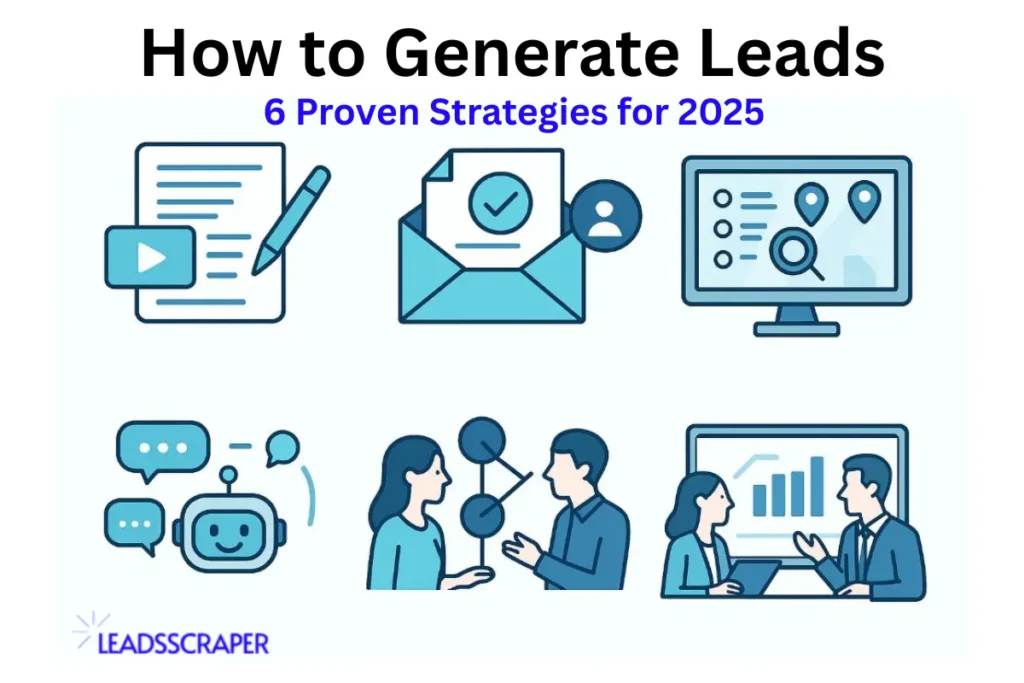
Strategy 1: Build a Content Engine That Attracts Qualified Prospects
Content marketing accounts for over half of all lead acquisition in 2025. But here’s what most businesses miss: generic content attracts generic leads.
Your content needs to solve specific problems your ideal customers face. When you publish detailed guides, case studies, and how-to articles that address real pain points, you attract prospects already interested in solutions you provide.
How to Implement
Start with keyword research to identify questions your prospects ask. Create detailed articles (minimum 1,500 words) that answer these questions thoroughly. Include data, examples, and actionable steps.
Focus on bottom-of-funnel content first. Articles like “how to choose [your product category]” or “[problem] solutions comparison” attract prospects closer to buying decisions.
Publish consistently. Companies blogging weekly generate 67% more leads than those posting monthly.
Strategy 2: Use Email Sequences for Nurturing
Email remains the most effective lead generation channel, used by 78% of successful businesses. The key isn’t sending more emails. It’s sending the right emails at the right time.
Automated email sequences nurture prospects through the buying journey without constant manual effort. Each email should provide value while gently guiding recipients toward a decision.
How to Implement
Create a welcome sequence for new subscribers: educational content in emails 1-3, case studies in emails 4-5, and soft offers in emails 6-7. Space emails 3-4 days apart initially, then weekly.
Segment your list based on behavior. Someone who downloaded a pricing guide needs different messaging than someone who read a beginner tutorial.
Test subject lines relentlessly. A 2% improvement in open rates can mean hundreds of additional leads monthly.
Strategy 3: Automate Lead Capture from Business Directories
Manual prospecting from Google Maps or business directories eats 10-15 hours weekly for most sales teams. You search, copy contact details, verify information, then organize everything in spreadsheets.
There’s a faster approach that maintains data quality while slashing time investment.
How to Implement
While you can manually extract business information from directories, tools like LeadsScraper.io automate the entire process. Search by location, industry, or keywords, then export verified contact details including emails, phone numbers, and websites in minutes.
The platform pulls data directly from Google Maps and Search, making sure of accuracy while eliminating manual data entry. For teams processing hundreds of leads weekly, this approach saves 12+ hours per person.
| Method | ⏱️ Time (100 leads) | 💰 Cost | 🎯 Best For |
|---|---|---|---|
| Manual research | 12-15 hours | $0 (labor cost) | Very small lists |
| ✅ Automated scraping | 15-20 minutes | $49-99/month | Scaling teams |
| Outsourced VA | 8-10 hours | $150-300/month | Ongoing research |
Save hours and quickly collect accurate leads using our automated scraping tools for directories and Google Maps.
Automate Lead CaptureStrategy 4: Launch AI Chatbots for 24/7 Qualification
Most website visitors browse outside business hours. Without someone to engage them, you lose potential leads to competitors who respond faster.
AI-powered chatbots qualify prospects around the clock by asking targeted questions, providing instant answers, and routing serious buyers to sales teams.
How to Implement
Install a chatbot that triggers after 30-45 seconds on key pages like pricing, features, or case studies. Program it to ask qualifying questions: company size, current solution, timeline for decision.
Set up conditional logic. If someone indicates they’re ready to buy within 30 days, immediately offer calendar booking. If they’re researching, offer relevant content downloads.
Review chat transcripts weekly to refine questions and responses based on actual conversations.
Use our Email Verifier to confirm active emails so your chatbots connect prospects to the right people instantly.
Verify Emails NowStrategy 5: Create Referral Programs That Actually Work
Referred leads convert 30% better than leads from other channels. Yet most referral programs fail because they’re too complicated or offer weak incentives.
Successful programs make referring easy and reward both parties meaningfully.
How to Implement
Design a simple one-step referral process. Give customers a unique link they can share via email or social media. When someone signs up through that link, both parties receive clear value.
Structure incentives around what your customers actually want. Service credits often work better than cash for B2B products. For B2C, discounts on next purchase drive more referrals than one-time rewards.
Promote your referral program in post-purchase emails, account dashboards, and during customer success calls.
Strategy 6: Align Sales and Marketing for Higher Quality Leads
Misalignment between sales and marketing costs B2B companies 10% or more of revenue annually. Marketing generates leads that sales considers unqualified. Sales ignores leads that marketing worked hard to nurture.
Companies with aligned teams are 58% more likely to exceed revenue targets because they agree on what makes a quality lead.
How to Implement
Hold monthly meetings where sales and marketing review lead quality together. Define clear criteria for marketing-qualified leads (MQLs) and sales-qualified leads (SQLs) based on actual conversion data, not assumptions.
Create a service-level agreement (SLA) specifying how quickly sales contacts new leads and how marketing supports follow-up. Track metrics both teams care about: lead-to-opportunity rate, opportunity-to-close rate, and customer acquisition cost.
Use shared tools where both teams access the same lead data and activity history. Transparency eliminates finger-pointing and improves handoff quality.
Use LeadsScraper's integrated platform to give your sales and marketing teams real-time access to the same quality leads.
Measuring What Matters
Track these metrics to evaluate lead generation effectiveness:
- Cost per lead (CPL): Total spend divided by leads generated
- Lead-to-customer rate: Percentage of leads becoming paying customers
- Time to conversion: Average days from first contact to closed deal
- Lead source ROI: Revenue generated per dollar spent on each channel
- Lead quality score: Percentage of leads meeting ideal customer profile criteria
Review these monthly and adjust strategies based on trends. A channel with low CPL but terrible conversion rates wastes resources despite appearing cost-effective.
Start Generating Better Leads Today
Effective lead generation in 2025 combines strategic content, automated tools, and tight alignment between teams. You don’t need to implement everything simultaneously.
Start with one strategy that addresses your biggest bottleneck. If you’re spending too much time on manual research, automate lead capture. If qualified prospects aren’t converting, improve your nurturing sequences.
The businesses winning in lead generation aren’t using secret tactics. They’re executing proven strategies consistently while measuring results and optimizing based on data. Pick your starting point and commit to 90 days of focused implementation.
Make smarter decisions by tracking cost per lead, conversion lead, and lead quality using LeadsScraper. Collect, verify, and organize prospects.
FAQ
Solve your ideal customer’s specific problems through detailed, targeted content published consistently.
Automated scraping tools save over 12 hours per week and ensure verified, accurate contact data for scaling teams.
AI chatbots engage and qualify visitors 24/7, increasing engagement by 34% with industry-specific help.
Simple referral processes and meaningful incentives for both parties drive conversion rates 30% higher than other channels.
Aligned teams agree on quality criteria and processes, leading to 20% annual revenue growth versus 4% decline for misaligned teams.